
%25202.webp)
The bonds that are formed between ROMAC members and our young patients are often enduring ones. Recently, our ROMAC Timor-Leste team caught up with Celestina a decade after her successful treatment.
Celestina was born in 2003 in Timor-Leste with Ellis–Van Creveld syndrome (EVC), a rare genetic disorder characterised by disabling skeletal abnormalities and life-threatening heart and lung defects. Since EVC affects multiple systems in the body, treatment tends to be symptom-specific and generally requires a team of medical professionals. Celestina’s future seemed bleak, but ROMAC was able to team up with other humanitarian agencies to give her the help she desperately needed.
In 2015, Celestina became the first patient treated under the new Global Program at Royal Children’s Hospital, Melbourne. She underwent cardiac surgery to correct her atrial septal defect (a hole between the upper chambers of the heart) and her health rebounded rapidly.
Orthopaedic specialist Mr Leo Donnan then helped Celestina by straightening her legs – a lengthy process requiring surgery and months in an Ilizarov frame. The Children First Foundation also stepped in to provide rehabilitation care at their Kilmore farm, and by the end of the year Celestina was able to return home.
Today, Celestina is a poised and confident young woman on the brink of a promising future. Her story is a powerful testament to what can be achieved with humanitarian medical aid, agency cooperation and personal courage and commitment.
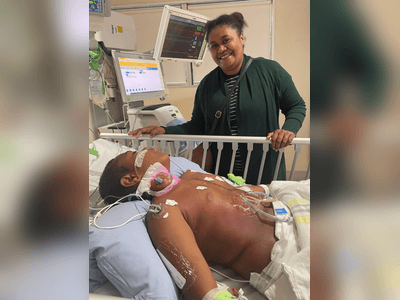
Brenden, aged 12, is recovering at Auckland’s Starship Children’s Hospital from successful heart surgery to repair damage caused by rheumatic fever.
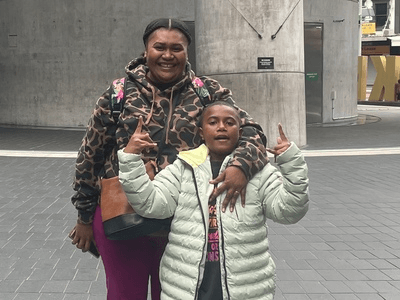
Brenden, aged 12, has been welcomed to Auckland for cardiac surgery needed as a result of rheumatic fever.
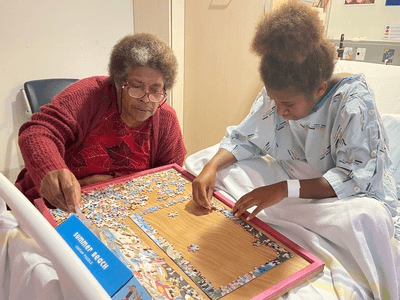
Keysha has returned home to Port Vila after successful heart surgery in Auckland.
Any donation you can make will help make treatment like this possible.